BRICS Gives Traditional Medicine a New Research Push
-
by
AHT Desk
Severity: Warning
Message: Trying to access array offset on null
Filename: controllers/Ayurveda.php
Line Number: 169
Backtrace:
File: /var/www/vhosts/ayurvedamagazine.org/httpdocs/application/controllers/Ayurveda.php
Line: 169
Function: _error_handler
File: /var/www/vhosts/ayurvedamagazine.org/httpdocs/index.php
Line: 295
Function: require_once
Severity: Warning
Message: Trying to access array offset on null
Filename: controllers/Ayurveda.php
Line Number: 169
Backtrace:
File: /var/www/vhosts/ayurvedamagazine.org/httpdocs/application/controllers/Ayurveda.php
Line: 169
Function: _error_handler
File: /var/www/vhosts/ayurvedamagazine.org/httpdocs/index.php
Line: 295
Function: require_once
Severity: Warning
Message: Trying to access array offset on null
Filename: controllers/Ayurveda.php
Line Number: 170
Backtrace:
File: /var/www/vhosts/ayurvedamagazine.org/httpdocs/application/controllers/Ayurveda.php
Line: 170
Function: _error_handler
File: /var/www/vhosts/ayurvedamagazine.org/httpdocs/index.php
Line: 295
Function: require_once
Severity: Warning
Message: Trying to access array offset on null
Filename: controllers/Ayurveda.php
Line Number: 170
Backtrace:
File: /var/www/vhosts/ayurvedamagazine.org/httpdocs/application/controllers/Ayurveda.php
Line: 170
Function: _error_handler
File: /var/www/vhosts/ayurvedamagazine.org/httpdocs/index.php
Line: 295
Function: require_once








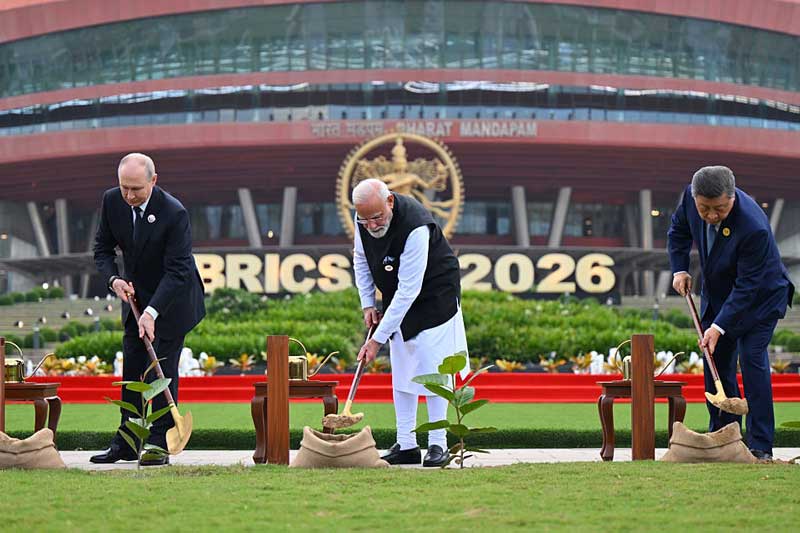
The BRICS (Brazil, Russia, India, China and South Africa) grouping has moved to deepen cooperation in traditional, complementary and integrative medicine (TCIM), with the New Delhi Declaration backing the proposed creation of a BRICS Expert Working Group on TCIM under the health track, on September 12, in New Delhi.
The move signals a shift from broad
recognition of traditional medicine towards more structured collaboration
focused on research, regulation, quality and scientific evidence.
The proposed expert group is expected to
provide a common platform for BRICS countries to exchange knowledge, coordinate
research and share regulatory and quality-assurance practices. The Declaration
also calls for greater cooperation on medicinal plants and herbal preparations
used for therapeutic and preventive purposes.
For countries with long-established
traditional medical systems, the initiative could help turn shared knowledge
and pharmacopoeial traditions into scientifically validated, quality-assured
therapeutic products.
Union Minister of State (Independent
Charge), Ministry of Ayush, Prataprao Jadhav, said the proposed group would
enable member countries to “share knowledge, strengthen research and advance
evidence-based approaches”. He said India would continue to promote Ayurveda
and other traditional systems through scientific research, quality assurance
and international collaboration.
The emphasis on evidence is central to the
initiative. The Declaration underlines the need to ensure the quality, safety
and efficacy of TCIM practices and products through evidence-informed
approaches and regulatory frameworks suited to national contexts.
The development builds on the BRICS Meeting
on Traditional, Complementary and Integrative Medicine held in Chandigarh on
July 21 during India’s BRICS chairship. The meeting brought together government
officials, experts and delegates from member states and produced consensus on
the Terms of Reference for the proposed expert group.
The initiative also comes as global health
policymakers increasingly examine how traditional medicine can contribute to
healthcare systems without compromising scientific standards. The WHO Global
Traditional Medicine Strategy 2025–2034 similarly stresses stronger evidence,
safety, quality and appropriate integration into health systems.
For India, the BRICS initiative offers an
international platform to advance Ayurveda and the wider Ayush ecosystem while
aligning traditional knowledge with modern research and regulatory standards.
The larger message from New Delhi is clear:
traditional medicine is gaining a place in global health discussions—but its
future credibility will increasingly depend on evidence, safety, efficacy and
quality.
editorial coordinator