Your Plate, Your Plan: Eating in Tune with Your Body
-
by
 Dr. Divya P
Severity: Warning
Message: Trying to access array offset on null
Filename: controllers/Ayurveda.php
Line Number: 169
Backtrace:
File: /var/www/vhosts/ayurvedamagazine.org/httpdocs/application/controllers/Ayurveda.php
Line: 169
Function: _error_handler
File: /var/www/vhosts/ayurvedamagazine.org/httpdocs/index.php
Line: 295
Function: require_once
Severity: Warning
Message: Trying to access array offset on null
Filename: controllers/Ayurveda.php
Line Number: 169
Backtrace:
File: /var/www/vhosts/ayurvedamagazine.org/httpdocs/application/controllers/Ayurveda.php
Line: 169
Function: _error_handler
File: /var/www/vhosts/ayurvedamagazine.org/httpdocs/index.php
Line: 295
Function: require_once
Severity: Warning
Message: Trying to access array offset on null
Filename: controllers/Ayurveda.php
Line Number: 170
Backtrace:
File: /var/www/vhosts/ayurvedamagazine.org/httpdocs/application/controllers/Ayurveda.php
Line: 170
Function: _error_handler
File: /var/www/vhosts/ayurvedamagazine.org/httpdocs/index.php
Line: 295
Function: require_once
Severity: Warning
Message: Trying to access array offset on null
Filename: controllers/Ayurveda.php
Line Number: 170
Backtrace:
File: /var/www/vhosts/ayurvedamagazine.org/httpdocs/application/controllers/Ayurveda.php
Line: 170
Function: _error_handler
File: /var/www/vhosts/ayurvedamagazine.org/httpdocs/index.php
Line: 295
Function: require_once








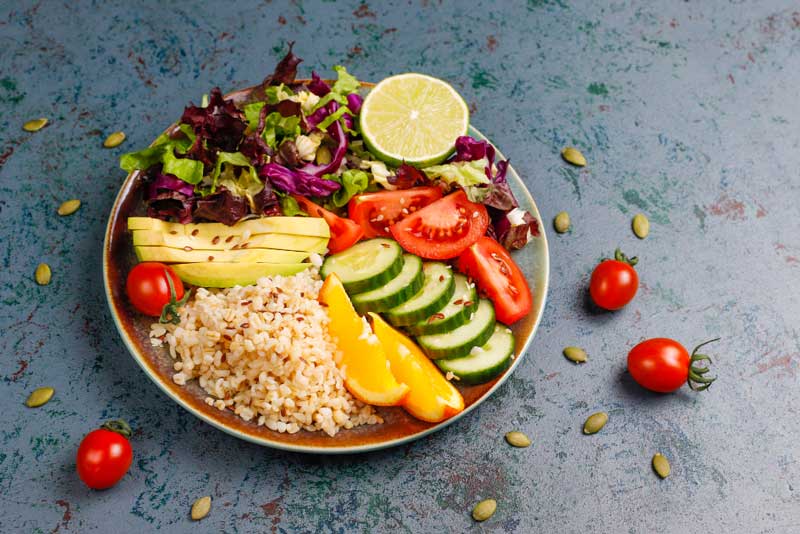
Digestion is given utmost priority in Ayurveda with treatment beginning by correcting digestion, based on Koshta, the nature of your digestive tract, and Agni, the strength of your digestive fire.
Appetite and digestion differ widely from person to person, and one of the biggest reasons lies within us—the gut microbiome. Unlike our genes, it is not fixed; it shifts constantly, shaped by diet, age, medications, way of life, and habits. These microbes don’t simply coexist—they produce powerful metabolites that affect not only digestion but also the brain, heart, lungs, immunity, and metabolism. When healthy microbes dominate, they strengthen our well-being. But when harmful species gain ground, they trigger inflammation, weaken defences, and fuel chronic disease. Understanding this dynamic ecosystem is the first step in learning how to truly personalise our diet for better health.
How to Evaluate Your Gut
Unlike blood pressure or glucose, there’s no simple lab test for gut health. But you can begin assessing it through mindful observation. Long before science explored the microbiome, Ayurveda placed digestion at the centre of health. Almost every Ayurvedic treatment begins with correcting digestion—guided by two key factors:
▶ Koshta – the nature of your digestive tract
▶ Agni – the strength of your digestive fire
Koshta shows how your gut behaves. Constipation and hard stools indicate a sluggish gut; loose motions point to an overactive one. The healthiest state lies in between—regular, comfortable stools.
Agni, on the other hand, determines how well you digest and metabolise food. Some people rarely feel hungry and still gain weight or face health issues—this signals weak Agni. Others are constantly hungry, eat frequently, and remain lean, yet they may face risks like diabetes or high cholesterol—an indication of overactive Agni. Then there are those whose appetite swings unpredictably between extremes, pointing to irregular Agni. Only a few enjoy balanced Agni, where appetite is steady, digestion is smooth, and meals leave both energy and comfort.
Koshta and Agni are not fixed traits—they exist on dynamic spectrums.
▶ On the Koshta spectrum, one end is sluggish and constipation-prone, the other overly sensitive and loose. The balance lies at the centre.
▶ On the Agni spectrum, one end is weak and sluggish, the other sharp and overactive, with balance again in between.
Importantly, your “normal” may not be the exact centre. If you’re naturally inclined toward weak Agni, balance for you may lie closer to that end—but mindful living helps you remain steady and symptom-free. The goal isn’t perfection, but finding balance within your unique constitution.
A quick self-check:
1. Do I feel a steady appetite?
2. Am I comfortable after meals?
3. Do I pass stools easily and regularly?
4. Is stool consistency normal—not too hard, not too loose?
5. Are gut movements predictable?
If you answered yes to all—your gut is in balance. Even one no may be your body’s early signal of imbalance—worth addressing before it grows into disease.
How to Decide Your Portion Size
Once you understand the state of your gut, the next step is knowing how much food your digestion can handle. In Ayurveda, digestion is compared to fire—Agni—for a reason. Think of a small flame: to keep it steady, you need to feed it the right fuel, in the right amount, at the right intervals. A few drops of oil help it burn brighter, but pouring in an entire can at once will smother it. Your digestive fire, works the same way. To protect and sustain it, you must choose not only the right kind of food but also the right quantity. This is why one-size-fits-all diet plans often fail—because what is “right” for you depends on your unique Agni.
Ayurveda classifies food as light (laghu) or heavy (guru)—not by calories, but by how easily it digests.
▶ Light foods can be eaten in larger portions, as they strengthen Agni.
▶ Heavy foods should be eaten in smaller amounts, as they can burden digestion.
Examples:
▶ Rice is lighter than wheat, but rice flour dishes are heavier.
▶ Among pulses, green gram is light and suitable daily; black gram is heavy and best limited.
▶ Puffed rice is light; flattened rice is heavier.
▶ Paneer, red meat, fish, curd, black gram → heavy, nutritious, but best in moderation or with strong digestion.
▶ Red rice, barley, green gram, lean meat, amla, honey, ghee → light and digestion-friendly.
The Simple Test:
▶ Hungry again soon → meal was light.
▶ Heavy and full for long → meal was heavy.
(Heavy ≠ unhealthy—just needs portion control.)
Golden Rule for Portion Size:
▶ Heavy foods → fill ½ stomach
▶ Light foods → fill ¾ stomach
▶ Always leave space for smooth digestion.
If a heavy meal delays your hunger, it’s fine to skip or postpone the next one. Listening to your body is key to balanced Agni. But what about the type of food—vegetarian or non-vegetarian—that best supports your system.
Vegetarian or Non-Vegetarian – What Is Healthy?
The debate isn’t simply about whether vegetarian or non-vegetarian food is healthier. Human diets evolved based on geography—deserts relied on animals, cold regions on meat and fish, and fertile lands on plants. Over generations, our bodies adapted to these patterns, which is why digestion often reflects ancestry. If your community traditionally followed a vegetarian diet, plant-based food may suit you better, and if fish or meat was part of your heritage, your body may process that more efficiently. The best approach? Keep your everyday meals close to your traditional diet while enjoying global cuisines in moderation.
Why Traditional Diet May Be Best for You
Let me begin with a story. The Inuit of the Arctic thrived on fat-rich diets of seals and whales, thanks to unique genetic adaptations. When scientists first linked their heart health to omega-3s, supplements became a global craze—until later research revealed the real secret lay in their genes. The same holds true for milk: many Europeans and South Asians digest it easily because their ancestors were dairy farmers, while East Asians and Native Americans often struggle due to lower lactase levels. Even rice and roti tell a story—farming communities with more amylase genes digest starch better than populations historically reliant on meat or fish. The lesson? Your body remembers. Generations of eating patterns have shaped your biology, a truth Ayurveda recognised long ago through Desha (region), Kala (season), and Prakriti (constitution). Modern science now echoes this wisdom: your plate should align with your roots, your genes, and your body’s quiet memory.
There is no universal perfect diet—only the one tuned to your body, environment, and roots. By honouring your Agni, ancestry, and Ayurveda’s wisdom, every plate can become your plan, and every meal, your medicine.
Prof. (Dr.) Divya P, an Ayurveda and healthcare innovator, is the Chief Innovation Officer at Dr. Krshna Lifesciences Ltd. and Director of Ragdima Academy. She is pursuing an Executive MBA at IIM Kozhikode.