
Traditional medicine is a repository of cultural identity, community wisdom,
and humanity’s collective knowledge of nature and wellbeing, and the world has
renewed its appreciation for integrative health approaches that combine
traditional wisdom with modern medical science. Working closely with WHO and
the Global Centre for Traditional Medicine in Jamnagar, we aim to strengthen
research, enhance quality and safety standards, and ensure that the benefits of
traditional medicine are available to all. This is another milestone in our
shared pursuit of equitable, accessible, and evidence-based healthcare systems
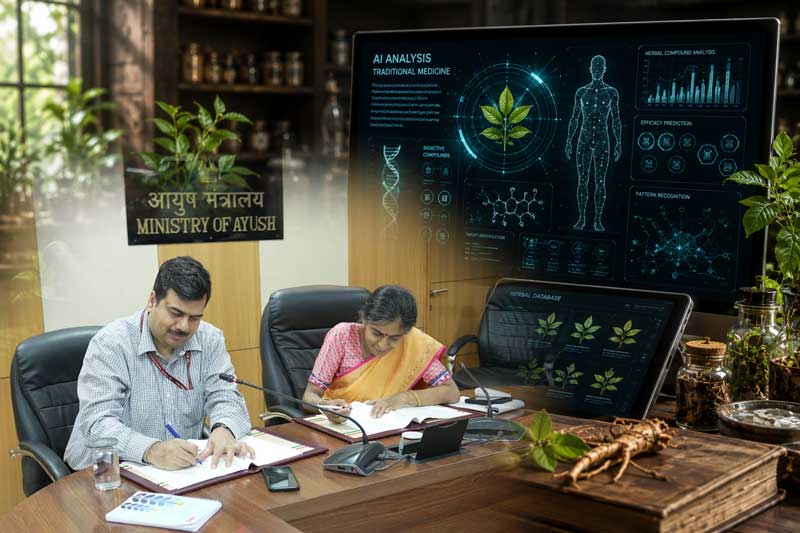
across the world, said Chief Guest Prataprao Jadhav, Union Minister of State
(IC), Ministry of Ayush and Union Minister of State for Ministry of Health
& Family Welfare. He was speaking at the Ambassadors’ Reception in New
Delhi on November 10 as a precursor to the 2nd WHO Global Summit on Traditional
Medicine scheduled for 17-19 December in New Delhi.
Referring to the Summit’s theme, ‘Restoring
Balance: The Science and Practice of Health and Wellbeing’, Vaidya Rajesh
Kotecha, Secretary, Ministry of Ayush stated that “it reflects our commitment
to holistic health and traditional medicine. India, in collaboration with WHO
and global partners, is working to strengthen standards, advance research, and
ensure quality assurance, and we are confident that this global dialogue will
foster meaningful international cooperation.”
India’s partnership with WHO strengthens
research, validation, and safe integration of traditional medicine worldwide,
said Ambassador Sibi George, Secretary (West), Ministry of External Affairs.
The high-level gathering briefed
ambassadors, high commissioners, and diplomatic representatives on the summit
vision, global health relevance, and opportunities for multilateral cooperation
in advancing evidence-based traditional medicine.