

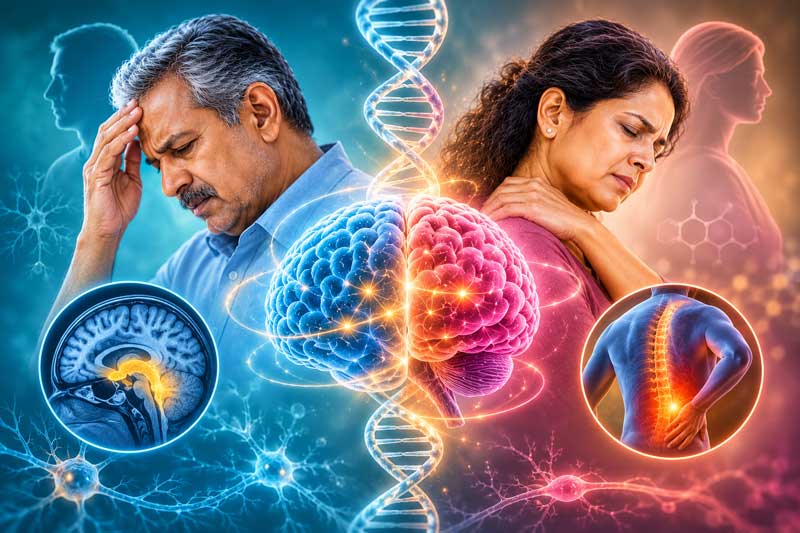
New research highlights how biological sex, genetics and hormonal changes could reshape our understanding of neurological disorders
For decades, medical research has often approached neurological disorders through a largely common biological lens. But what if the same disease is different in every individual? What if the key to understanding conditions such as Alzheimer’s disease and chronic pain lies in biological differences medicine is yet to explore?
A new set of studies reported by ScienceDaily on November 16, 2026, offers an intriguing perspective: biological sex, genetic makeup and hormonal changes may significantly influence how neurological disorders develop and respond to treatment.
The findings, scheduled for Neuroscience 2026, the annual meeting of the Society for Neuroscience, challenge the idea that a universal treatment approach can work equally well for everyone.
One of the striking aspects of the research concerns menopause and Alzheimer’s disease. Two investigations suggest that hormonal changes during menopause may interact with inherited genetic risk factors, influencing vulnerability to the disease.
In one study, researchers found that individuals carrying genetic risk factors for Alzheimer’s responded differently to menopause hormone therapy compared with those without these risks. The effects also depended on the specific combination of hormones used.
Another investigation, involving rodents undergoing menopause, revealed that memory-related brain circuits became particularly vulnerable when genetic risk factors were also present.
These findings raise an important question: could menopause represent a critical biological turning point for some women at risk of Alzheimer’s? Although more research is necessary, the evidence suggests that hormonal transitions deserve greater attention in neurological research.
The biological divide extends beyond memory disorders. Researchers investigating fibromyalgia, a chronic condition characterised by persistent pain and fatigue, discovered notable differences between male and female mice.
Female mice displayed greater sensitivity to touch and stronger immune-system activation than males. This suggests that the biological mechanisms responsible for chronic pain may differ between sexes. It also raises the possibility that treatments designed around these differences could improve pain management.
Another study explored the relationship between intestinal inflammation and brain health. Researchers found that prolonged gut inflammation affected brain function and Alzheimer’s-related changes differently in male and female mice.
This observation adds weight to scientific interest in the gut-brain connection, demonstrating that processes occurring outside the brain may influence neurological health.
The findings are particularly significant in their collective message. Alzheimer’s and chronic pain are not simply conditions that can be understood through symptoms alone. Genetics, hormones, immune responses and biological sex may all contribute to their complexity.
However, caution is essential. These are emerging research findings, some involving animal models, and they do not establish new treatments or prove that every individual will experience these differences.
Nevertheless, the research points towards an important future for medicine: personalised healthcare that recognises biological individuality rather than relying exclusively on standardised approaches.
Perhaps the greatest lesson is that equality in healthcare does not always mean identical treatment. Sometimes, understanding our biological differences is precisely what makes better treatment possible.
Reference: ScienceDaily