Hello

  • Kerala Tourism Minister  Relaunches Ayurveda and Health Tourism Website — www.ayurvedamagazine.org

    In Kerala, where Ayurveda is woven into the cultural fabric and generations have grown up with its healing traditions, taking this heritage to a global audience is a natural extension of its legacy. The revamped Ayurveda and Health Tourism website was relaunched by Kerala Tourism Minister PC Vishnunadh in Thiruvananthapuram on October 28 in the presence of Editor and Publisher Benny Thomas. It signals a fresh chapter for Ayurveda and Health Tourism, a much-sought-after quarterly magazine published from Kerala, widely recognised as a cradle of authentic Ayurveda.

    The Minister said, “I am very happy that Ayurveda Magazine is doing a wonderful job to promote Keralam’s authentic Ayurveda to the entire world. This year, Kerala tourism’s main focus is authentic Ayurveda, yoga, wellness, and Ayurveda-led wellness. Keralam aims to be a medical value tourism hub. So, on behalf of the Government of Kerala and the Department of Tourism, I wish all the best to Ayurveda Magazine.”
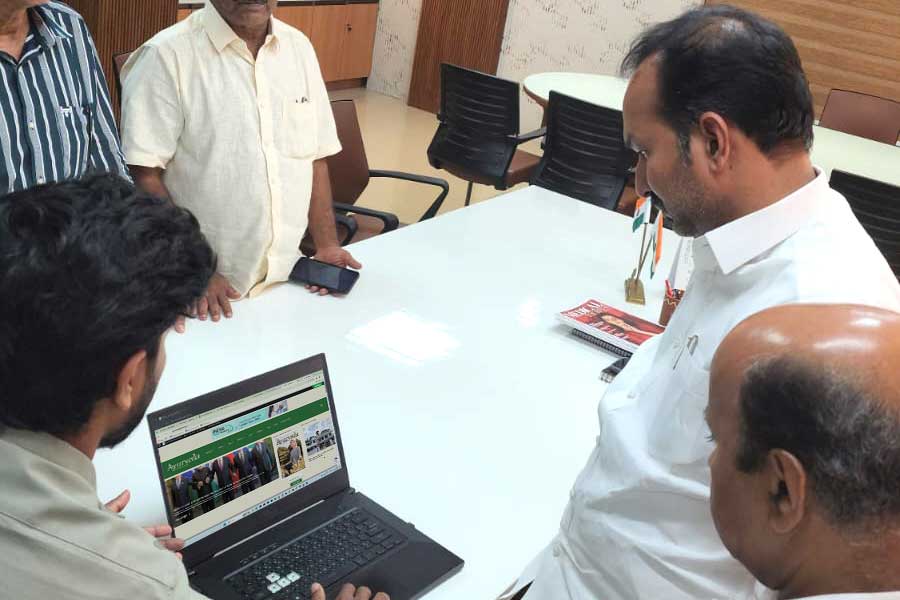
    The relaunch marks a renewed digital journey for a publication dedicated to India’s traditional systems of health and wellness for over 25 years.

    The platform seeks to bring the magazine’s rich editorial universe to a wider readership, connecting India’s wellness heritage with the growing global interest in holistic health and therapeutic travel. Its coverage spans Ayurveda, Yoga, lifestyle, wellness, Naturopathy, medicinal herbs, research papers, and the latest developments in traditional medicine by doctors and experts.

    For readers exploring wellness opportunities in India, the website is a gateway to treatment experiences, wellness destinations, and the diverse practices of the nation’s health tourism landscape. Research-led content sits alongside personal narratives, celebrity patient endorsements and the enduring charm of grandmothers’ remedies—traditional household wisdom passed down through generations.

    This blend of science, experience and cultural memory gives the platform a distinctive identity. While research and current developments encourage informed engagement with Ayurveda, familiar home remedies reconnect readers with traditions long been part of Indian family life. Responsible presentation of health information remains essential, particularly when distinguishing traditional practices from scientifically established treatments.

    The relaunch also reflects ways travellers discover wellness destinations. Increasingly, digital platforms help them explore therapies, understand traditions, and make informed choices before embarking on a health-focused journey.

    With Keralam as its home base, Ayurveda and Health Tourism is positioned to tell a wider story: one in which India’s ancient healing knowledge meets contemporary curiosity and global wellness aspirations.

    The website’s renewed presence is therefore more than a digital milestone. It is an opportunity to carry India’s wellness narrative beyond geographical boundaries and make the conversation around Ayurveda more accessible to readers around the world.
  • World Stroke Day: Ayurveda’s Timeless Wisdom Meets the Urgency of Modern Stroke Care

    A stroke can transform an ordinary day into a life-altering crisis. A sudden loss of speech, a weakened limb, or a drooping face reminds one of how profoundly brain health shapes human independence. On October 29, World Stroke Day, Ayurveda offers a complementary perspective on prevention, healthy living, and rehabilitation — while modern medicine underscores one vital truth: every minute counts.

    The global statistics are alarming. According to the World Health Organization, approximately 11.9 million new strokes occurred worldwide in 2021, and an estimated 93.8 million people were living with the consequences of stroke. The World Stroke Organization warns that one in four adults over the age of 25 will experience a stroke during their lifetime.

    Ayurveda, India’s traditional system of medicine, views health as a balance of body, mind, diet, and daily routines. This has been discussed in classical Ayurvedic literature under conditions such as Pakshaghata, traditionally associated with derangement of Vata dosha. Although these concepts offer a traditional framework for understanding illness, they are not equivalent to the modern medical explanation of a stroke, which results from interrupted blood flow to the brain or bleeding within it.

    Ayurveda’s preventive emphasis on balanced meals, regular physical activity, adequate sleep, stress management and disciplined daily habits resonates with established approaches to reducing stroke risk. Controlling blood pressure, diabetes and cholesterol, avoiding tobacco, and limiting excess salt remain essential.

    However, traditional remedies must never replace emergency treatment. Sudden facial drooping, arm weakness or speech difficulty demands immediate hospital care. Do not delay treatment to try herbal preparations, massage or other home remedies.

    For survivors, appropriately supervised rehabilitation may incorporate selected traditional practices alongside evidence-based physiotherapy, occupational therapy and speech therapy. Any Ayurvedic procedures should be done under expert care, as some products can interact with medicines or increase bleeding risks.

    This World Stroke Day, the message is one of integration, not opposition. Ayurveda can encourage healthier living and holistic support, while modern emergency medicine provides essential acute treatment.

    References: World Health Organisation, World Stroke Organisation, Ayurveda Literature

  • Keraleeya Ayurveda Samajam

    Healing through Ayurveda  for Over 100 years

    Ayurveda, meaning “the science of life,” is one of the world’s oldest medical systems, originating in India over 5,000 years ago and offering a holistic approach to prevention, diagnosis, and natural healing.

    During British rule, however, Ayurveda was systematically sidelined as colonial authorities promoted Western medicine while neglecting indigenous knowledge systems. In response, the Zamorin of Calicut, Manavikrama Ettan Raja, took a visionary step in 1902 by founding the Arya Vaidya Samajam at Chalappuram, Kozhikode, with the aim of making Ayurvedic treatment accessible to the public.

    In a rare act of unity, the rulers of Kochi and Malabar, together with eminent Ashta Vaidya families, strengthened this initiative. In 1913, the organization was renamed the Keraleeya Ayurveda Samajam, which went on to establish the world’s first public Ayurvedic hospital at Cheruthuruthy.

    The Samajam’s Legacy

    What distinguished the Samajam was its institutional approach. For the first time, Ayurveda moved from private households into an organised, hospital-based system, enabling structured and systematic patient care.

    In 1911, British attitudes toward Ayurveda began to change when Sir Basil Scott, Chief Justice of the Madras High Court, was cured of a chronic stomach ailment by the Samajam’s Chief Physician, Thriprangottu Parameswaran Mooss. This landmark event earned the institution colonial recognition and led to the creation of the honorary title Vaidyaratnam, first conferred on Parameswaran Mooss.

    Today, more than a century later, the Samajam stands as the world’s oldest organized Ayurvedic institution, continuing its mission of healing and preservation of authentic Ayurvedic knowledge.

    Samajam Chikilsa Sampradayam (Panchakarma of Samajam)

    The Samajam pioneered the institutionalised practice of Panchakarma therapies. Traditional procedures are meticulously administered, including distinctive Kerala therapies such as Dhara, Pizhichil, Thalapothichil, Njavarakkizhi, and Njavaralepam. The Samajam also introduced the sequential application of therapies—an innovation that became foundational to modern Ayurvedic practice. All treatments are carried out by well-trained male and female therapists under the close supervision of experienced physicians.

    Addressing Critical Health Concerns

    The Samajam offers specialised care for gynecological conditions such as infertility and menstrual disorders under expert female physicians. It also treats a wide range of chronic and complex conditions including spinal disorders, autoimmune diseases, arthritis, psoriasis, neurological conditions, post-stroke rehabilitation, migraine, sleep disorders, and stress-related illnesses.

    Alongside therapeutic care, wellness treatments for relaxation and rejuvenation are offered. Patients from Europe, the United States, and Australia return year after year, drawn by the institution’s authenticity and holistic approach.

    The Samajam Experience

    Spread across eight acres along the banks of the Bharathappuzha, the hospital campus features a serene cottage-style layout. Treatments range from one week to 45 days, depending on medical needs. The Samajam also prepares its own medicines in-house, drawing from classical texts and ancient manuscripts.

    A Society-Oriented Institution

    The Samajam is a service-oriented, non-profit institution. Revered as a “pitrutulya” (parent) institution by generations of practitioners, it remains open to public membership and democratic leadership through elections held every five years.

    Future Vision

    As it approaches its 125th anniversary, the Samajam is pursuing global accreditations and exploring collaboration with the Ministry of AYUSH. Its vision is to be recognized not only as the world’s first Ayurvedic institution, but also as one of the leading global centres for authentic Ayurvedic care.

    H.O.: Ganeshgiri P.O.,
    Shoranur – 679 123, Palakkad Dist., Kerala State, India.
    Phone: 0466 2222403, 2223225
    9447272403, 9400224528

    Branches:
    Thiruvananthapuram:
    Ph: 0471-2338145, 2321810
    Ernakulam:
    Ph: 0484 2342469, 8089671800
    Chennai:
    Ph: 044-28132361, 28130874
    Andaman:
    Ph: 03192-244445, 244233

  • Sudarshanam Ayurveda Eye Hospital & Panchakarma Centre

    ‘Sudarshanam’ is not merely a private venture; it arose as part of a nucleus of Ayurveda enthusiasts, scientists, and charitable workers who, in the mid-1980s, conceived it as a shared vision. It is the dream of restoring balance to each of the eight branches of Ashtanga Ayurveda to their ancient glory. The eight divisions comprise Kaya (bodily health), Bala (cardiovascular and growth-related), Graha (psychiatry and mental health), Urdhvaanga (head and neck), Shalakya Tantra (ophthalmology, ENT, and dental), Shalya (trauma and surgery), Damshtra (teeth bite,toxicolgy), and Jara Chikitsa (geriatric care). Within Urdhvaanga, the subspecialty of Netra Chikitsa — Shalakya Tantra — denotes interventions performed by Shalya Shastras (surgical arts).

    In 1990, at the request of the world-renowned Ophthalmic surgeon and Padma Bhushan awardee, late Dr. S. S. Badarinath, who had established the Chennai Sankara Nethralaya, he visited Thiruvalla for two days to understand the strengths and limitations of Ayurvedic Ophthalmology. Based on these insights, he conceived an extensive 26-page project and recommended it for providing scope of Ayurveda in Eyecare.

    Consequently, Ayurvedic graduate Dr B. G. Gokulan, was invited to the Medical Research Foundation (MRF) to work with MS Fellows for a year, during which he got trained, taught examination techniques, and studied research models.

    With self-criticism and a view to addressing the many limitations of modern ophthalmic care, Dr. Badarinath indicated that many substantial solutions could be contributed by Ayurveda.

    After completing training in modern ophthalmic examination techniques successfully, Sudarshanam Eye Clinic began formal operations in 1993.

    Now, after over 30 years of service to the public, Sudarshanam has achieved meaningful progress in offering hope for many conditions previously deemed inoperable or untreatable – related to nerve (neural) vision, other eye diseases, and more.

    The increasing visual impairments in children, nerve-related visual disturbances in the elderly, numerous allergic ophthalmic diseases, immune disorders, and progressive keratoconus in youths are areas where Ayurveda has demonstrated effectiveness over the past three decades.

    Having examined data from hundreds of diseases, treatments and prepared to publish research findings, discussions are progressing with Gujarat’s premier Ayurvedic educational institution, Parul University, for collaboration.

    Though it is a private venture, Sudarshanam has, in an exceptional manner, been delivering  treatment free of cost to local, disadvantaged patients, and treatment at free or subsidized rates for other poor patients. Moreover, as per the decision of the Ayurvedic hospital management association, for the last 4 years treatments have been provided at no profit, to members of the Indian Defence, Army, Police, and their close relatives.

    Dr. B. G. Gokulan

    Sudarshanam Ayurvedic Eye Hospital & Panchakarma Center

    Thymala, Manjadi PO, Thiruvalla, Pathanamthitta Dist ; KERALA INDIA – 689  105

    Phone (clinic): 9447163071

    Clinic: 8075150603

  • ⁠World Health Dubai

    Save the date: 25-28 January 2027
    Location: Dubai Exhibition Centre, Expo City & Dubai World Trade Centre 


    World Health Expo

    Where the world of healthcare meets

    235,000+

    Professional visits

    4,200+

    Exhibitors

    195+

    Countries represented

    90,000+

    Unique attendees

    Why attend?

    Discover what’s emerging across healthcare

    World Health Expo brings together products, sectors, organisations and professionals from across healthcare, giving you the flexibility to explore the areas that interest you and discover how different parts of the industry connect.

    Buy your ticket

    <p>Connect with the wider ecosystem</p>Connect with the wider ecosystemMeet professionals and organisations from different areas of healthcare and broaden your network beyond your immediate field.

    <p>Explore beyond your usual focus</p>Explore beyond your usual focusDiscover products, sectors and ideas across medical equipment, diagnostics, laboratories, pharma, technology, wellness and infrastructure.

    <p>Expand your knowledge</p>Expand your knowledgeExplore accessible content and new perspectives across healthcare business, future care, prevention, wellness and longevity.

    <p>Create your own WHX experience</p>Create your own WHX experienceUse your interests to plan your experience across both venues and focus your time on the products, content and connections that matter to you.

  • 11th World Ayurveda Congress & Arogya Expo 2026


    Welcome to the 11th World Ayurveda Congress & Arogya Expo 2026, the world’s premier gathering dedicated to advancing Ayurveda through science, innovation, and global collaboration under the theme Integrative Ayurveda for Global Health.

    11th WAC & AROGYA EXPO 2026

    The 11th World Ayurveda Congress & Arogya Expo 2026 will be held in Bhubaneswar, Odisha from 10th to 13th December 2026. Organized by World Ayurveda Foundation with the active support from the Ministry of Ayush, Government of India, and the Government of Odisha, this prestigious global gathering will bring together thought leaders, practitioners, researchers, and industry stakeholders from across the world.

  • Global Wellness Summit

    Be in the room. Limited availability remains. Register now! 

    The Global Wellness Summit (GWS), the foremost gathering of international leaders in the now $6.8 trillion global wellness economy, is thrilled to announce that this year’s 20th anniversary GWS will be at Angsana Laguna Phuket in Thailand under the theme “The Science, Art and Soul of Wellness”. With gratitude to our host sponsors Thailand Convention & Exhibition Bureau (TCEB), Amazing Thailand and the Ministry of Public Health, Department of Thai Traditional and Alternative Medicine. Real-time translation will be available at the summit. LEARN MORE + REGISTER | VIEW AGENDA