Category: News

  • WHO urged to revisit drinking water standards as nitrate health concerns mount

    The safety of drinking water is facing renewed scrutiny, with 85 international health and environmental organisations urging the World Health Organization (WHO) to reconsider its decades-old nitrate limits amid emerging concerns over long-term health risks.

    According to an AFP report published by ETHealthworld on November 3, the coalition, which includes Greenpeace International and the World Organization of Family Doctors (WONCA), has called on WHO to prioritise nitrate in its upcoming review of global drinking water quality guidelines.

    The concern centres on the existing WHO limit of 50 milligrams of nitrate per litre, established in 1958 primarily to prevent methemoglobinemia, commonly known as ‘blue-baby syndrome’. However, campaigners argue that this benchmark no longer adequately reflects contemporary scientific evidence.

    Recent epidemiological studies have linked prolonged exposure to even relatively low nitrate concentrations with increased risks of colorectal cancer, premature births and other adverse pregnancy outcomes. Children and pregnant women are considered particularly vulnerable.

    Nitrate contamination is closely associated with intensive agriculture, including synthetic fertiliser use and livestock farming, raising concerns about pollution of groundwater and surface water. The coalition warns that hundreds of millions of people worldwide could be exposed to elevated nitrate levels.

    Adding weight to the demand, a Danish government-commissioned expert panel recommended lowering the permissible limit to 6 milligrams per litre. Denmark has committed to moving towards this stricter standard.

    The appeal highlights a growing public health challenge: drinking water regulations must evolve alongside scientific understanding. For WHO, the proposed review could become an important step towards strengthening global water safety and preventing avoidable disease.

    WHO’s Guidelines for Drinking-water Quality retain a nitrate guideline value of 50 mg/L, intended to protect against methaemoglobinaemia (blue-baby syndrome), particularly in bottle-fed infants. Its 2026 guidance also explains that the guidelines provide the scientific basis for countries to develop their own drinking-water standards.

    References: World Health Organisation, AFP, ETHealthworld
  • Youth Must Become the Face of India’s Fight Against Tobacco: Prataprao Jadhav

    India’s fight against tobacco can be won if young people take the lead to challenge social acceptance of tobacco consumption, besides government warnings and awareness advertisements. They should turn the fight into a nationwide people’s movement, Union Minister of State for Health Prataprao Jadhav has said in New Delhi.

    Launching the fourth edition of the 60-day Tobacco-Free Youth Campaign (TFYC 4.0) on October 28, at Dr Ram Manohar Lohia Hospital in New Delhi, Jadhav urged students and young citizens to become ambassadors of a tobacco-free India. He stressed that protecting the younger generation from nicotine addiction was essential to building a healthy and developed nation.

    The campaign’s message is: prevention must begin before tobacco becomes a habit. With universities and colleges as the primary focus this year, the initiative seeks to transform educational campuses by offering healthy choices to discourage tobacco.

    The challenge remains substantial. According to the Health Ministry, more than 5.8 lakh educational institutions and 73,000 villages were declared tobacco-free during the previous three editions. The latest drive will combine public awareness, stronger enforcement of tobacco control laws, community participation, digital outreach and cessation support.

    Jadhav also drew attention to the dangers of tobacco smoke, which contains over 7,000 chemicals, including toxic and cancer-causing substances. Nicotine exposure during adolescence can adversely affect brain development, memory and learning, making early intervention particularly important.

    However, the real test lies beyond official launches and pledges. Young people must challenge peer pressure, discourage tobacco use among friends and encourage existing users to seek help to quit. Schools, families and local communities must support this effort.

    The message is clear: India’s youth should become the strongest advocates of a tobacco-free generation. It will require collective action, sustained commitment, and a change in social attitudes.

    References: Press Trust of India

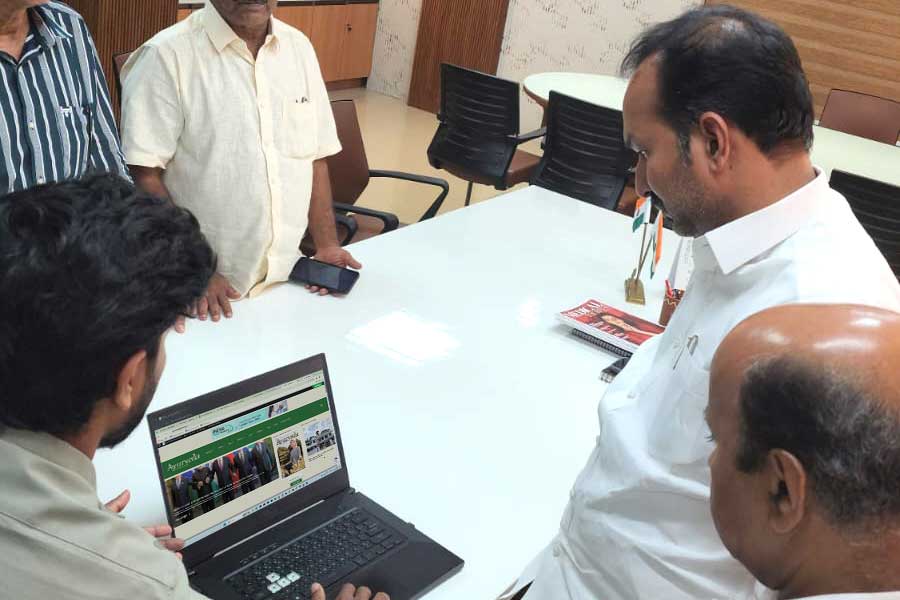
  • Kerala Tourism Minister  Relaunches Ayurveda and Health Tourism Website — www.ayurvedamagazine.org

    In Kerala, where Ayurveda is woven into the cultural fabric and generations have grown up with its healing traditions, taking this heritage to a global audience is a natural extension of its legacy. The revamped Ayurveda and Health Tourism website was relaunched by Kerala Tourism Minister PC Vishnunadh in Thiruvananthapuram on October 28 in the presence of Editor and Publisher Benny Thomas. It signals a fresh chapter for Ayurveda and Health Tourism, a much-sought-after quarterly magazine published from Kerala, widely recognised as a cradle of authentic Ayurveda.

    The Minister said, “I am very happy that Ayurveda Magazine is doing a wonderful job to promote Keralam’s authentic Ayurveda to the entire world. This year, Kerala tourism’s main focus is authentic Ayurveda, yoga, wellness, and Ayurveda-led wellness. Keralam aims to be a medical value tourism hub. So, on behalf of the Government of Kerala and the Department of Tourism, I wish all the best to Ayurveda Magazine.”

    The relaunch marks a renewed digital journey for a publication dedicated to India’s traditional systems of health and wellness for over 25 years.

    The platform seeks to bring the magazine’s rich editorial universe to a wider readership, connecting India’s wellness heritage with the growing global interest in holistic health and therapeutic travel. Its coverage spans Ayurveda, Yoga, lifestyle, wellness, Naturopathy, medicinal herbs, research papers, and the latest developments in traditional medicine by doctors and experts.

    For readers exploring wellness opportunities in India, the website is a gateway to treatment experiences, wellness destinations, and the diverse practices of the nation’s health tourism landscape. Research-led content sits alongside personal narratives, celebrity patient endorsements and the enduring charm of grandmothers’ remedies—traditional household wisdom passed down through generations.

    This blend of science, experience and cultural memory gives the platform a distinctive identity. While research and current developments encourage informed engagement with Ayurveda, familiar home remedies reconnect readers with traditions long been part of Indian family life. Responsible presentation of health information remains essential, particularly when distinguishing traditional practices from scientifically established treatments.

    The relaunch also reflects ways travellers discover wellness destinations. Increasingly, digital platforms help them explore therapies, understand traditions, and make informed choices before embarking on a health-focused journey.

    With Keralam as its home base, Ayurveda and Health Tourism is positioned to tell a wider story: one in which India’s ancient healing knowledge meets contemporary curiosity and global wellness aspirations.

    The website’s renewed presence is therefore more than a digital milestone. It is an opportunity to carry India’s wellness narrative beyond geographical boundaries and make the conversation around Ayurveda more accessible to readers around the world.

  • World Stroke Day: Ayurveda’s Timeless Wisdom Meets the Urgency of Modern Stroke Care

    A stroke can transform an ordinary day into a life-altering crisis. A sudden loss of speech, a weakened limb, or a drooping face reminds one of how profoundly brain health shapes human independence. On October 29, World Stroke Day, Ayurveda offers a complementary perspective on prevention, healthy living, and rehabilitation — while modern medicine underscores one vital truth: every minute counts.

    The global statistics are alarming. According to the World Health Organization, approximately 11.9 million new strokes occurred worldwide in 2021, and an estimated 93.8 million people were living with the consequences of stroke. The World Stroke Organization warns that one in four adults over the age of 25 will experience a stroke during their lifetime.

    Ayurveda, India’s traditional system of medicine, views health as a balance of body, mind, diet, and daily routines. This has been discussed in classical Ayurvedic literature under conditions such as Pakshaghata, traditionally associated with derangement of Vata dosha. Although these concepts offer a traditional framework for understanding illness, they are not equivalent to the modern medical explanation of a stroke, which results from interrupted blood flow to the brain or bleeding within it.

    Ayurveda’s preventive emphasis on balanced meals, regular physical activity, adequate sleep, stress management and disciplined daily habits resonates with established approaches to reducing stroke risk. Controlling blood pressure, diabetes and cholesterol, avoiding tobacco, and limiting excess salt remain essential.

    However, traditional remedies must never replace emergency treatment. Sudden facial drooping, arm weakness or speech difficulty demands immediate hospital care. Do not delay treatment to try herbal preparations, massage or other home remedies.

    For survivors, appropriately supervised rehabilitation may incorporate selected traditional practices alongside evidence-based physiotherapy, occupational therapy and speech therapy. Any Ayurvedic procedures should be done under expert care, as some products can interact with medicines or increase bleeding risks.

    This World Stroke Day, the message is one of integration, not opposition. Ayurveda can encourage healthier living and holistic support, while modern emergency medicine provides essential acute treatment.

    References: World Health Organisation, World Stroke Organisation, Ayurveda Literature

  • Technology, talent and customer focus emerge as priorities at ATM 2026

    The travel industry’s next phase of growth will be shaped not simply by technology, but by how effectively companies combine artificial intelligence, skilled people and a deep understanding of the customer, industry leaders said at Arabian Travel Market (ATM) 2026 in Dubai on September 15.

    This was the crux of the executive roundtable, From Rebound to Readiness: Shaping What’s Next Across the Travel Ecosystem, organised by FUTURE& at the ATM Experience Hub. Senior representatives from Google, Visa, Miral Destinations, Alibaba Fliggy and Khamas Hospitality discussed how the sector is moving beyond post-pandemic recovery towards longer-term preparedness and competitiveness.

    A central theme was the rapidly changing traveller. Consumers increasingly expect travel to be seamless from the initial planning stage through the experience itself and even after returning home. Personalisation and integration are becoming less of a luxury and more of an expectation.

    Anthony Nakache, Managing Director MENA at Google, said technology is already available to help businesses respond to these demands, with AI potentially playing a major role in improving the traveller journey.

    Yet the discussion also highlighted a counterbalance to the technology race: people remain central to hospitality and travel.

    “Travel is a very human and personal experience,” said Maha Nizam, Head of GCC Marketing at Visa. She said technology should enhance employees’ capabilities rather than replace the human element that defines the travel experience.

    For Miral Destinations, customer priorities remain the starting point for commercial and operational decisions. CEO Liam Findlay said questions about what customers want and how they will respond underpin discussions ranging from revenue to product development.

    The broader takeaway from the session was that future readiness is becoming a strategic issue rather than a distant ambition. Businesses are being pushed to make decisions today on technology, talent, partnerships and customer experience that could determine their ability to compete in the years ahead.

    Danielle Curtis, Regional Portfolio Director – UAE, RX Global, said future readiness meant converting change into competitive advantage.

    Held under the theme Travel 2040: Driving New Frontiers Through Innovation and Technology, ATM 2026 is examining the impact of AI, digital transformation, smart mobility and evolving traveller expectations on tourism.

    The ongoing 33rd edition of ATM at Dubai World Trade Centre will run through September 17.

    Ayurveda and Health Tourism is a media partner for the event.

  • Ayurveda at the Crossroads: Tradition Meets Evidence in Global Health

    Ayurveda—once a niche cornerstone of India’s health heritage—is on the cusp of becoming a mainstream global player. With a booming Ayush economy now worth $43.4 billion, spontaneous market growth has created a robust foundation for the ancient system’s expansion.

    India’s 11th Ayurveda Day (Sept 23, 2026) under the banner ‘Ayurveda for a Healthier Tomorrow’ marks a pivotal moment. The theme echoes the nation’s ambition to fuse its centuries old wisdom with contemporary research, quality standards, and international health frameworks. The challenge is not only global outreach but also constructing the evidence and credibility needed for responsible worldwide adoption.

    Over the past decade, the Ayush sector’s market surged from $2.85 billion to $43.4 billion, while exports doubled—from $1.09 billion to $2.16 billion. Government initiatives bolstered MSMEs and startups, cementing a broader ecosystem that nurtures innovation, entrepreneurship, and investment.

    Survey data underscore domestic acceptance: a 2022–23 All India Ayush survey, covering 181,298 households, found 94.8 % rural and 96 % urban awareness. Nearly half of rural and over 50 % of urban respondents used Ayush in the past year, with Ayurveda topping the list. This substantial base signals strong potential for preventive health and wellness contributions.

    Medical value travel offers a lucrative avenue. India launched a dedicated Ayush Visa in July 2023, and partnered with the India Tourism Development Corporation to highlight Ayurveda centric circuits. A global market estimated at $115.6 billion in 2022 is projected to reach $286.1 billion by 2030, positioning Ayurveda at the heart of India’s health tourism strategy.

    Strategic roads for global expansion have been road mapped. NITI Aayog’s July 2026 ‘Strategic Roadmap for Making Ayurveda Global’ outlines a 2047 horizon, focusing on regulation, standards, research, education, exports, branding, and medical value travel. Its emphasis on quality, credible research, and sustainable practices is designed to secure international trust.

    India’s engagement with the WHO’s Global Traditional Medicine Strategy (2025–2034) further solidifies its stance. The WHO’s 2024 ICD 11 inclusion of Ayurveda, Siddha, and Unani morbidities offers a globally comparable framework, but not an endorsement of efficacy. Collaborative efforts are underway to develop intervention codes, cementing these systems within mainstream health documentation.

    Central to Ayurveda’s future is evidence generation. The Ministry of Ayush’s portal lists over 43,000 research entries, a growing compendium that will underpin robust standards and global confidence while preserving the system’s distinct principles.

    As the 11th Ayurveda Day heralds a new chapter, the path forward hinges on proven science, innovation, professional capacity, and responsible globalization—ensuring Ayurveda’s evolution from a traditional heritage to a cornerstone of the evolving global health landscape.

    Reference: Press Information Bureau

  • Keralam Wants the World to See More Than Its Postcard

    Keralam has long known how to sell its postcard — the languid backwaters, green hills, beaches and coconut-lined villages. But Chief Minister V D Satheesan was keen to impart something more: the Keralam that lies beyond the postcard, on September 14 in Thiruvananthapuram.

    At Cliff House, Satheesan met 35 content creators and social media influencers from 19 BRICS member and partner countries, turning an interaction with digital storytellers into an unusual exercise in public diplomacy.

    The message was clear. Keralam, he told his international guests, should not be viewed merely as a tourist destination but as a state with a sizeable coastline, expanding ports and aviation infrastructure, a highly skilled workforce and a growing technology ecosystem.

    Satheesan underlined Keralam’s familiar social-development credentials, pointing to its achievements in literacy and its efforts towards digital literacy, while positioning Ayurveda and holistic wellness as potential areas of global appeal.

    The emphasis on doctors, engineers and IT professionals was particularly revealing. Kerala’s pitch was not simply come and see us, but also come and understand us and experience the place.

    According to authorities, the visitors were taken through different facets of Kerala during their three-day visit. At the Kerala Arts & Crafts Village in Kovalam, they encountered traditional crafts, cuisine and cultural practices.

    The meeting carried two messages — one aimed at tourists and another at investors and global audiences.

    For Keralam, the bet is on authenticity, which could help enrich the state’s international narrative.

    The world’s cameras are already pointed at Keralam.

  • BRICS Gives Traditional Medicine a New Research Push

    The BRICS (Brazil, Russia, India, China and South Africa) grouping has
    moved to deepen cooperation in traditional, complementary and integrative
    medicine (TCIM), with the New Delhi Declaration backing the proposed creation
    of a BRICS Expert Working Group on TCIM under the health track, on September
    12, in New Delhi.

    The move signals a shift from broad
    recognition of traditional medicine towards more structured collaboration
    focused on research, regulation, quality and scientific evidence.

    The proposed expert group is expected to
    provide a common platform for BRICS countries to exchange knowledge, coordinate
    research and share regulatory and quality-assurance practices. The Declaration
    also calls for greater cooperation on medicinal plants and herbal preparations
    used for therapeutic and preventive purposes.

    For countries with long-established
    traditional medical systems, the initiative could help turn shared knowledge
    and pharmacopoeial traditions into scientifically validated, quality-assured
    therapeutic products.

    Union Minister of State (Independent
    Charge), Ministry of Ayush, Prataprao Jadhav, said the proposed group would
    enable member countries to “share knowledge, strengthen research and advance
    evidence-based approaches”. He said India would continue to promote Ayurveda
    and other traditional systems through scientific research, quality assurance
    and international collaboration.

    The emphasis on evidence is central to the
    initiative. The Declaration underlines the need to ensure the quality, safety
    and efficacy of TCIM practices and products through evidence-informed
    approaches and regulatory frameworks suited to national contexts.

    The development builds on the BRICS Meeting
    on Traditional, Complementary and Integrative Medicine held in Chandigarh on
    July 21 during India’s BRICS chairship. The meeting brought together government
    officials, experts and delegates from member states and produced consensus on
    the Terms of Reference for the proposed expert group.

    The initiative also comes as global health
    policymakers increasingly examine how traditional medicine can contribute to
    healthcare systems without compromising scientific standards. The WHO Global
    Traditional Medicine Strategy 2025–2034 similarly stresses stronger evidence,
    safety, quality and appropriate integration into health systems.

    For India, the BRICS initiative offers an
    international platform to advance Ayurveda and the wider Ayush ecosystem while
    aligning traditional knowledge with modern research and regulatory standards.

    The larger message from New Delhi is clear:
    traditional medicine is gaining a place in global health discussions—but its
    future credibility will increasingly depend on evidence, safety, efficacy and
    quality.

  • Arabian Travel Mart 2026 opens in Dubai

    The 33rd edition of Arabian Travel Market (ATM) 2026 opened at Dubai World Trade Centre on September 14. The global travel industry has converged in Dubai for business, networking, knowledge exchange, and collaboration. 

    This year’s ATM comes as the tourism sector looks to move beyond recent disruptions and rebuild confidence through stronger partnerships, technology and innovation. The event is being held under the theme, Travel 2040: Driving New Frontiers Through Innovation and Technology.

    The major highlight of the four-day event is the launch of ATM Travel Tech, a dedicated co-located show featuring more than 180 exhibitors from 30 countries. Its 850-square-metre Tech & Innovation Hub will showcase developments in artificial intelligence, robotics, immersive technologies, fintech and green technology.

    The conference programme brings together tourism ministers, industry executives, researchers and technology specialists across the Global Stage, Future Stage and Experience Hub. Discussions focus on issues ranging from AI and digital transformation to traveller confidence, destination resilience and sustainable tourism growth.

    The opening ministerial debate examines how collaboration can help strengthen the resilience and global competitiveness of the Gulf tourism sector. Senior officials from the UAE, Bahrain and the European Commission are participating in the event.

    Research organisations including Tourism Economics, Euromonitor International and STR will present insights into changing travel patterns and emerging opportunities.

    ATM 2026 will additionally unveil a refreshed brand identity, reflecting its evolution from a traditional trade exhibition into a broader platform for year-round connections and business opportunities across the global tourism industry.

    Ayurveda and Health Tourism is a media partner of the event.

  • Ayurveda Day 2026 to Put Tradition at the Heart of Future Healthcare

    This year’s theme, ‘Ayurveda for a Healthier Tomorrow’, captures the government’s effort to connect ancient health practices with contemporary priorities such as preventive care, nutrition, wellness and sustainable living.

    Addressing the curtain-raiser press conference at the National Media Centre on September 7 in New Delhi, Union Minister of State (Independent Charge) for Ayush and Minister of State for Health and Family Welfare, Prataprao Jadhav, said the occasion would evolve into a nationwide health communication campaign rather than remain a government-led annual event.

    The campaign will centre on three broad priorities: integrating different systems of medicine for better health outcomes; strengthening evidence, research and innovation in Ayurveda; and promoting community wellbeing alongside sustainable lifestyles.

    The emphasis on evidence is particularly significant. While Ayurveda has a wide public following, Jadhav stressed the need to counter misconceptions and offer reliable, accessible information to citizens. He urged the media to spread evidence-based messages to schools, colleges, young people, rural communities and urban households.

    The larger ambition, he suggested, was to create a chain linking traditional knowledge with modern evidence, innovation and public welfare.

    Prof. Sanjeev Sharma, Vice-Chancellor of the National Institute of Ayurveda, Jaipur, outlined initiatives planned for Ayurveda Day, including the National Dhanwantari Ayurveda Awards 2026, safety dossiers on medicinal plants, Standard Treatment Guidelines for skin diseases, and programmes linked to Ayush Vision 2030.

    With Nagpur as the national focal point, Ayurveda Day 2026 aims to blend an ancient system of healing with a broader conversation on how India—and the world—can stay healthier tomorrow.

    Reference: Press Information Bureau