The World Health Summit Regional Meeting to highlight traditional medicine as a major driver of global health equality
To be a significant achievement for the global traditional medicine sector.

To be a significant achievement for the global traditional medicine sector.
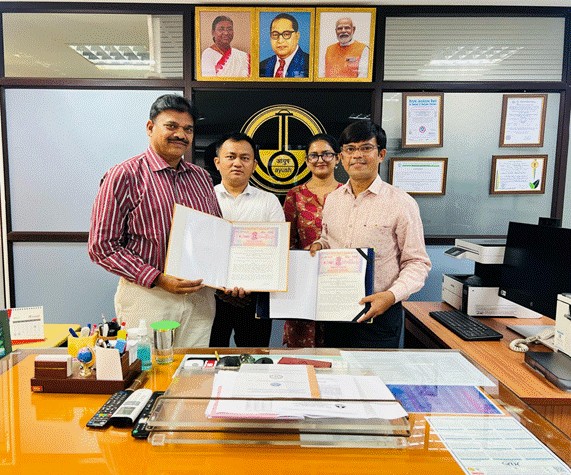
Developing high-quality, safe, and effective Ayurvedic formulations for combating diabetes
Fostering integrated care and delivering promising outcomes
The Ministry of Micro, Small and Medium Enterprises (MSME) and Ministry of AYUSH (Ayurveda, Yoga & Naturopathy, Unani, Siddha, Sowa Rigpa and Homoeopathy) have signed an agreement to work jointly to promote nutraceuticals industry in India, Pratap Chandra Sarangi, Minister of State for MSME said at an ASSOCHAM event held in New Delhi today.
He also advised the nutraceutical industry to develop their research wings to enable India to march ahead in line with India’s very rich, traditional, glorious cultural history in this field.
Source: Business Standard
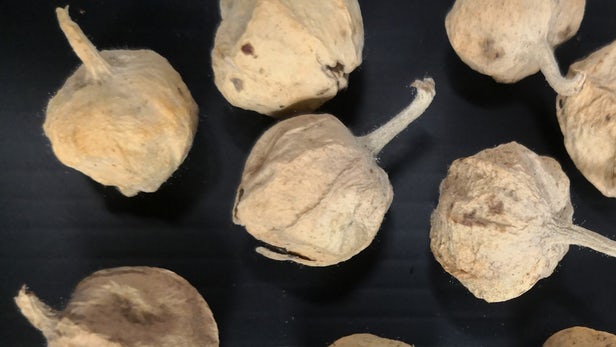
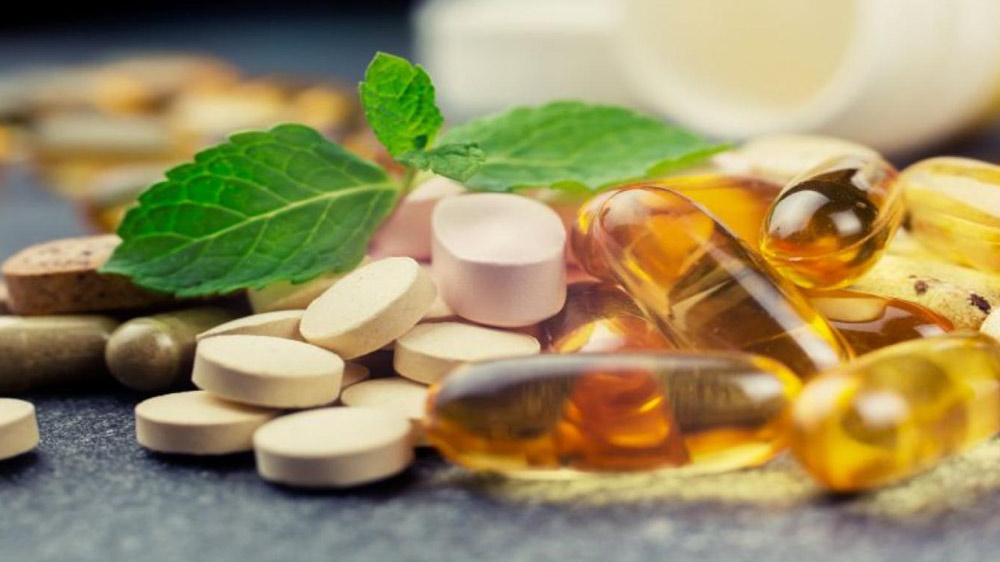
Commonly known as Paneer dodi, the herb Withania coagulans has been used in traditional Indian medicine for many years now – among other things, it is claimed to help control diabetes. A new study shows that it indeed may do so, particularly when it’s ingested within special capsules.
Unfortunately, however, the berries are very bitter – this makes it quite difficult to consume a sufficiently-sized dose of an extract obtained from them. Additionally, even if someone were able to eat or drink enough of that extract, much of its medicinal content would likely be destroyed by their stomach acid.
With that in mind, the researchers encapsulated their W. coagulans steroids within nanoparticles made of chitosan, which is a natural substance derived from shellfish exoskeletons. Those particles were in turn coated in a food-based starch, making them better able to withstand acidic conditions. This was done so that they could pass through the stomach, not dissolving and releasing the steroids until reaching the small intestine.
The Modi government’s aim to provide a fillip to traditional alternative medicine reflected in the Union Budget 2019-20 as the AYUSH Ministry saw around 15 per cent hike in budgetary allocation from the last fiscal.
An outlay of Rs 1,939.76 crore has been earmarked for the Ayurveda, Yoga and Naturopathy, Unani, Siddha and Homoeopathy (AYUSH) sector in the current financial, an increase of 14.59 per cent over the revised estimates of Rs 1,692.77 crore of the last fiscal.
The government allocated Rs 40 crore for the All India Institute of Ayurveda, New Delhi, for financial year 2019-2020, while Rs 50 crore was earmarked for the National Institute of Homoeopathy in Kolkata.
For strengthening of AYUSH Delivery Systems, the Centre granted Rs 92.31 crore. The government had earmarked budget estimates of Rs 71.36 crore in 2018-19 which was later revised and increased to Rs 101.86 crore.
Move to explore avenues to recognize Ayurvedic terms on international platform – Senior officials of the Ministry of Ayush ((Ayurveda, Yoga, Unani, Siddha and Homeopathy) has proposed a meeting with the officials of the World Health Organization from June 10 to 11 to develop Ayurvedic terminology that has been coded so far by the experts. The main aim of the meeting is to explore avenues to recognise various Ayurvedic terms on the international platform. A National Ayush Morbidity and Standardised Terminologies Electronic Portal (Namaste-Portal) has been developed in this regard by the Ministry of Ayush. This portal has various Ayurvedic terms with their synonyms in English and Hindi languages. Along with this, many old Sanskrit manuscripts have been digitized to woo the international audience. The Center and the Bengal government have decided to enhance the infrastructure of this traditional treatment system so as to boost its reach. A plan has been chalked out by the World Health Organization with the Ministry of Ayush on how this traditional method can be adopted in foreign countries. In accordance with this, the ministry signed a Project Collaboration Agreement with the World Health Organisation for co-operation on promoting the quality, safety, and effectiveness of serving provision in traditional and complementary medicine. According to Dr Asit Panja, an invitee member of the forthcoming event, Ayush system of medication has a significant role in delivering healthcare to masses. It is cost effective and will benefit economically-challenged patients. Hence it is of paramount importance to promote the traditional method of treatment not only in the country but abroad as well. Dr Panja, a professor of National Institute of Ayurveda, has been a part of the team that prepared the Ayurveda Morbidity Codes. The World Health Organisation has been developing a terminology in Ayurveda, Unani and Sidhha so that the terms, which are originally in Sanskrit, can be comprehended by the people in foreign countries and India’s traditional form of treatment can be implemented in other countries too.
Traditional medical systems in India are seen to influence their goodness in every nook and corner of our country and AYUSH is supporting them in this regard through their various meetings and conferences held across the globe. As part of these activities, AYUSH plans to spearhead their works in Kerala by holding its first International conclave in the state from May 17th to 21st in Kochi. This four-day event will be the first ever event that is specifically organized by the Government of Kerala for the ultimate showcase of the growth and scientific development of AYUSH systems of medicines in Kerala. This conclave is sure to enhance the grass root presence of AYUSH systems in this region. Through this conclave, AYUSH aims to create awareness about different public health activities in the AYUSH systems of medicines with an objective of including AYUSH as a mainstream public health option and to establish Kerala as a global hub of Health and Wellness tourism.
The State University of Milan has finally approved courses – Introduction to Ayurveda and The Indian Traditional Medicine. These courses are approved by the Faculty of Medicine, State University of Milan and is now available for the medical students of the 5th and 6th year as an optional course.
The courses will be taught by Dr. Antonio Morandi, Prof. Antonella Delle Fave, Carmen Tosto and Dr. Paolo Vintani (pharmacist) of the School of Ayurvedic Medicine, “Ayurvedic Point”. Though a small course, it is the first time that an Ayurveda course is officially introduced to medical students in Italy.
According to Ayurvedic Point, this is a great collaboration and integration with Modern Medicine.
A one-day symposium in London sponsored by the All Party Parliamentary Group (APPG) on Indian Traditional Sciences gathered together scientists, administrators, practitioners, and health professionals, to present the scientifically established therapeutic value of different forms of Yoga, particularly with a view to making such approaches available through the National Health Service. Introducing the speakers, the APPG’s Secretariat Amarjeet Bhamra explained that the Group, initiated in 2008 by the late Lord King, Lord Patel and himself, had managed to gather many different disciplines of natural medicine and different factions within each, around one table. The Group now comprises 30 MPs and Lords working to support the introduction of Ayurveda, Yoga, and other Traditional Indian Sciences in health care, education, and other areas of national life in the UK. With the NHS in crisis, overwhelmed by the huge increase in the number of people – currently about 15 million – suffering from long-term chronic conditions, the proven potential of Yoga and its sister therapy Ayurveda to prevent and treat disease should be harnessed and implemented for the health of the population, Amarjeet said.