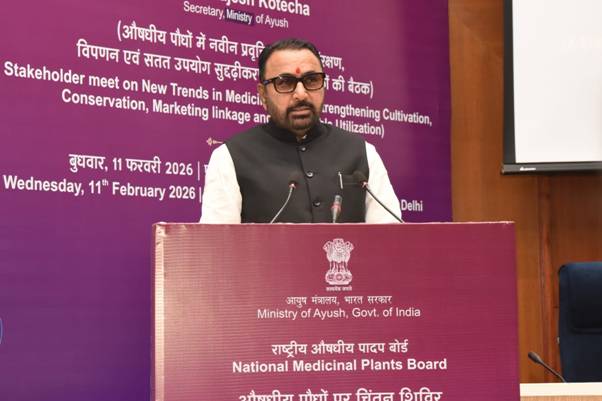

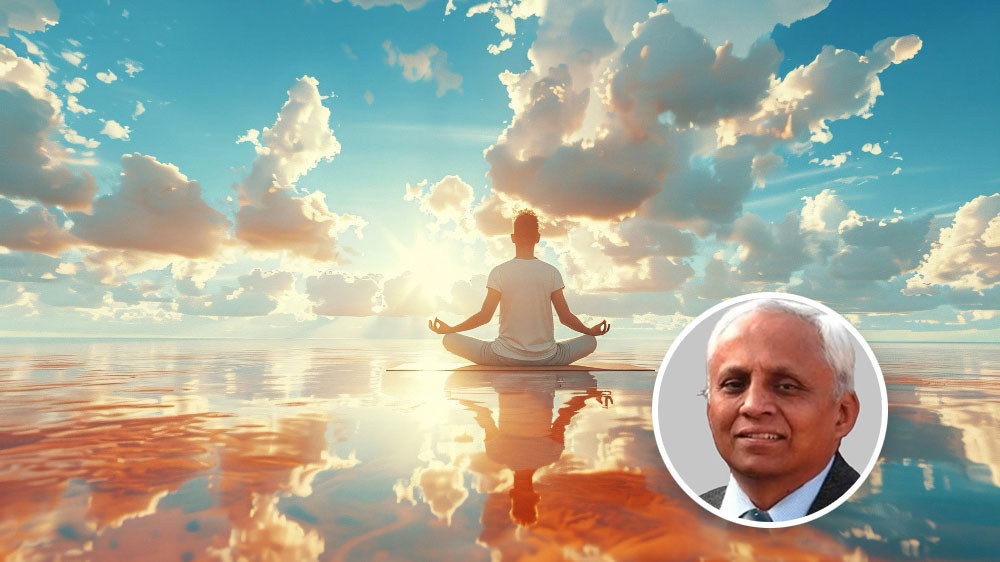
Dr B N Gangadhar, Scientist Chair, Department
of Ayush, delivering the Prof. B. K. Bachhawat Memorial Lifetime
Achievement Award Lecture at the 43rd Annual Meeting of Indian Academy of
Neurosciences, hosted by Rajiv Gandhi Centre for Biotechnology (BRIC-RGCB), in
Kovalam, Thiruvananthapuram on October 29.
Highlighting that yoga can be
leveraged in the treatment of mental disorders, Dr B N Gangadhar,
Scientist Chair, Department of Ayush, said evidence-based integration of yoga
is possible in country’s clinical practice.
Dr Gangadhar was delivering
the Prof B K Bachhawat Memorial Lifetime Achievement Award Lecture at the four-day
43rd Annual Meeting of Indian Academy of Neurosciences (IAN), organised by
Rajiv Gandhi Centre for Biotechnology (BRIC-RGCB), from October 29 in
Thiruvananthapuram.
Speaking on ‘Neurobiological Evidence
for Yoga in Depression’, he highlighted the need to develop a curriculum for
training and advance research on the benefits of yoga in the treatment of
mental disorders like depression and schizophrenia.
“It is vital to integrate and
mainstream yoga in psychiatry service,” he pointed out.
Dr Gangadhar, also former
director of NIMHANS, Bengaluru, laid stress on need for extending yoga biology
research to other disorders.
He said most patients obtained a drop in
cortisol by doing yoga along with medication. “Brain-derived neurotrophic
factor (BDNF) levels are low in depression and regular practice of yoga helps
rise in plasma BDNF levels,” he said.
In her keynote address on ‘Brain
Mosaicism in Epilepsy and Cortical Malformations,’ Dr Stéphanie Baulac of Paris
Brain Institute (ICM), France, gave a detailed presentation on the novel
detection methods for brain somatic mutations (DNA sequence changes that occur
after conception) in epilepsy.
Experts from leading institutions
from India and abroad are presenting papers at the event.